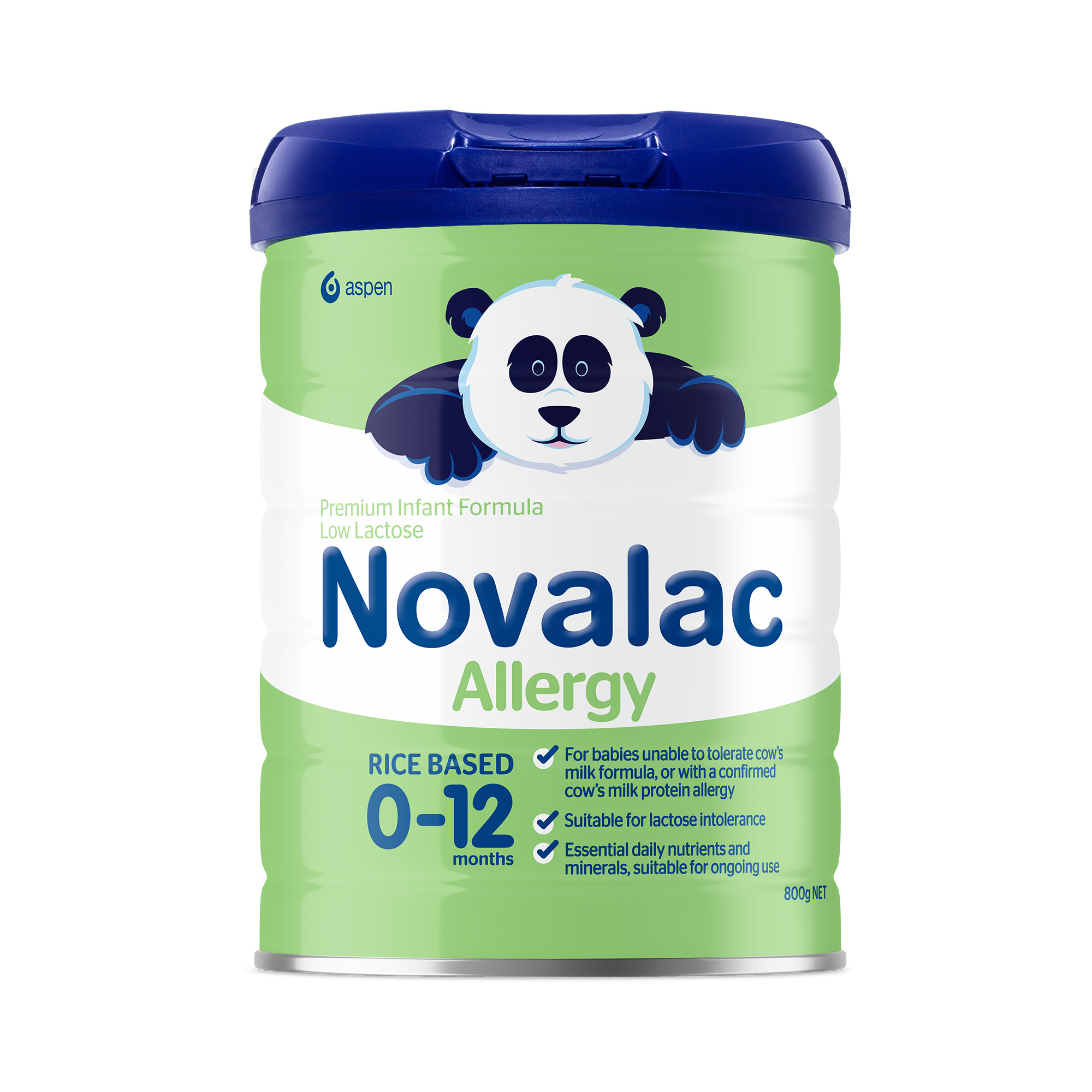
Novalac Allergy
Novalac Allergy is a premium evidence-based specialty infant formula using protein sourced from rice for babies with a confirmed cow’s milk protein allergy, or unable to tolerate cow’s milk formula. Novalac Allergy is also suitable for lactose intolerant babies.
For more information on cow’s milk protein allergy visit Australasian Society of Clinical Immunology and Allergy (ASCIA) : Cow's milk protein (dairy) - Australasian Society of Clinical Immunology and Allergy (ASCIA)
Please always consult your healthcare professional should you have any concerns relating to common feeding problems, or for further advice specific to your baby.
Wanting to purchase online? Just click on the following links.



About Novalac Allergy
Key Benefits
- For babies unable to tolerate cow’s milk, or with a confirmed cow’s milk protein allergy
- Reduces cow’s milk protein allergy symptoms
- Suitable for lactose intolerance*
- Can be used from birth to 12 months
- Pleasant tasting
- Contains essential daily nutrients and minerals
- Suitable for ongoing everyday use
Novalac Allergy is nutritionally complete and suitable for ongoing everyday use. Babies aged over 6 months should be offered solid food in addition to infant formula.
*lactose <0.00135g/100 mL,
galactose <0.00135g/100mL
(undetectable below these limits)
Ingredients
Maltodextrin, vegetable oils (palm, rapeseed, sunflower, coconut), rice proteins hydrolysate, corn starch, emulsier (citric acid esters of mono and diglycerides), dipotassium phosphate, tricalcium citrate, magnesium chloride, calcium chloride, L-lysine, disodium phosphate, tripotassium citrate, Mortierella alpina oil (ARA), oil from the microalgae Schizochytrium sp. (DHA), vitamins (A, B1, B12, B2, B6, C, D3, E, K1, biotin, folic acid, niacin, pantothenic acid), L-leucine, ferric pyrophosphate, L-isoleucine, choline bitartrate, L-cystine, L-tryptophan, L-threonine, taurine, inositol, L-carnitine, zinc sulphate, antioxidants (extract rich in tocopherols), cupric sulphate, potassium iodide, manganese sulphate, sodium selenite.
Nutritional Information
Nutrition Information
Composition per 100mL Novalac Allergy formula
(reconstituted at one 4.3 g scoop/30mL water)
| Average Values | Per 100ml prepared feed* | Units |
| Energy | 66 | kcal |
| 275 | kJ | |
| Protein equivalent | 1.7 | g |
| Carbohydrates | 7.2 | g |
| Lactose | <0.0135** | g |
| Galactose | <0.0135** | g |
| Fats | 3.3 | g |
| Linoleic acid (Omega 6) | 0.6 | g |
| α-Linolenic acid (Omega 3) | 61 | mg |
| ARA | 10.4 | mg |
| DHA | 10.1 | mg |
| Minerals | ||
| Sodium | 26 | mg |
| Potassium | 71.5 | mg |
| Chloride | 49.4 | mg |
| Calcium | 58.5 | mg |
| Phosphorus | 32.5 | mg |
| Magnesium | 5.9 | mg |
| Iron | 1.0 | mg |
| Zinc | 0.5 | mg |
| Iodine | 13 | µg |
| Copper | 50.7 | µg |
| Manganese | 6.5 | µg |
| Selenium | 1.4 | µg |
| Vitamins | ||
| Vitamin A | 65 | µg RE |
| Vitamin B1 | 52 | µg |
| Vitamin B2 | 104 | µg |
| Vitamin B6 | 45.5 | µg |
| Vitamin B12 | 0.2 | µg |
| Vitamin C | 9.1 | mg |
| Vitamin D3 | 0.9 | µg |
| Vitamin E | 1.4 | mg α-TE |
| Vitamin K1 | 5.9 | µg |
| Niacin | 0.6 | mg |
| Pantothenic acid | 0.4 | mg |
| Folic acid | 9.1 | µg |
| Biotin | 2 | µg |
| Other Nutrients | ||
| Choline | 7.8 | mg |
| Inositol | 3.9 | mg |
| Taurine | 5.2 | mg |
| L-carnitine | 1.6 | mg |
*As prepared according to instructions
** lactose and galactose undetectable below these limits
Safe Preparation
WARNING: Follow instructions exactly. Prepare bottles and teats as directed. Do not change proportions of powder except on medical advice. Incorrect preparation can make your baby very ill.
Always wash your hands before preparing a bottle. Each bottle should be prepared individually. Only use the measuring scoop provided.
It is recommended that formula be used immediately after it is prepared.
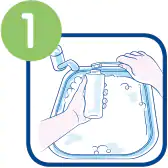 |
Wash the feeding bottle, cap, teat and any utensils to be used and sterilise them in boiling water. |
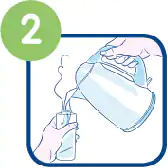 |
Boil clean drinking water for 5 minutes and allow to cool to 40°C. Pour the required amount of water (see Feeding Guide) into the bottle. |
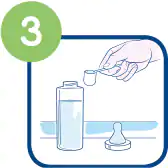 |
Measure the correct quantity of formula (see Feeding Guide) into the bottle using the scoop provided. Always use one level scoopful (4.3g) per 30mL of water. |
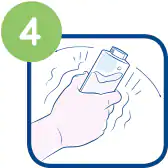 |
Secure the lid on the bottle and shake for at least 30 seconds until the powder is completely dissolved. Let cool to lukewarm temperature (37°C) without re-shaking. Test the temperature on your wrist before feeding. |
Formula should be consumed within one hour of preparation. Any formula left over after feeding should be discarded.
Feeding Guide
This is a general guide only. Your baby may need more or less bottles than indicated depending on their appetite. Babies aged over 6 months should be offered solid food in addition to infant formula. Always add one level scoopful (4.3g) to 30mL of cooled pre-boiled water.
| Age (months) | Bottles per day | Level scoops per bottle | Cooled boiled water (mL) |
| 0 to 1 | 6 | 3 | 90 |
| 1 to 2 | 5 | 4 | 120 |
| 2 to 4 | 5 | 5 | 150 |
| 4 to 6 | 4 | 7 | 210 |
| 6 to 12 | 3* | 7 | 210 |
* As part of a diversified diet